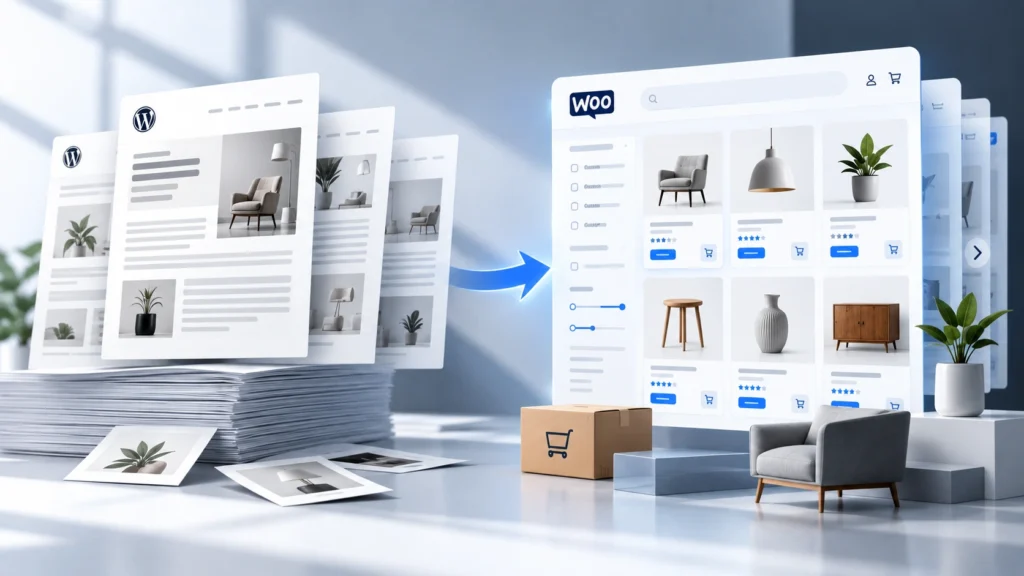



Wondering which one is better among WordPress, Wix, and Weebly? Let’s help you evaluate!
Short answer: What you’ll get from this guideIf you’re scaling an eLearning, edtech, or ecommerce brand, this guide helps you choose a platform you won’t have to abandon in 18 months. You’ll see exactly where Wix and Weebly fit, where they stop fitting once your catalogue, course library, or traffic grows, why WordPress powers roughly 4 in 10 of all websites — and the businesses that build on it long-term. Read it, and you’ll be able to make the call with eyes open, rather than undoing an expensive one later. |
For context, let’s start with a quick overview.
When you look at WordPress, Wix, and Weebly from a wider lens, you’ll notice:-
- WordPress is a free Content Management System (CMS) for people who love freedom, customization, flexibility, creative control, and also have some coding knowledge. It started off as a platform for bloggers but it has come a long way and is now used by SMBs as well as large enterprises. In the majority of cases, people who choose WordPress, seek professional help from WordPress experts to build thier website
- For context on just how far it has come: WordPress now powers around 41.9% of all websites and roughly 59% of all sites that run on a known CMS, making it about eight times larger than its nearest competitor (W3Techs, 2026)
- On the other hand, Wix and Weebly require no coding experience for you to build a simple website with basic as well as advanced functionality. So, if you want to get started quickly and don’t have a budget or time to outsource website development, then you’re better off with Wix and Weebly. (Note that you’ll have to select a more expensive plan if you want more freedom and features.)
The question that actually matters: The real decision for a growing eLearning, edtech, or ecommerce brand isn’t “which is easiest to start?” — all three are easy to start. It’s “which one will still fit when I have 10,000 students, 2,000 SKUs, or a six-figure monthly revenue running through it?” That single reframe changes the answer for most founders, and it’s the lens we’ll keep returning to below.
Now, to help you make a confident call, we’ve compared the three on the basis of the necessary features you need to build a premium website.
We’ve discussed everything in detail below. But before we dive deep into the details, let’s strengthen our foundation by understanding what you need in a website builder.
So without wasting any more of your precious time, let’s jump right in.
Also Read: What is better WordPress or Wix or Squarespace?
Outgrowing your course platform faster than you expected?
See how teams move structured course libraries, student records, and revenue onto WordPress without losing data or downtime. Built for programs that are scaling, not starting over.
Already on LearnDash and wondering what the recent StellarWP changes mean for you? It isn’t shutting down — but a few things have shifted. See whether you should Hold, Watch, or Act →
What to look for in a website builder?
When choosing a website builder, there are a few key things you should look for:
- Ease of use: The website builder should be easy to use, even if you have no coding experience. Look for a drag-and-drop interface that allows you to easily add and remove elements from your website.
- Customization: The website builder should allow you to customize your website to match your brand and style. Look for a wide range of templates and themes, as well as the ability to add your own CSS and JavaScript code.
- Features: The website builder should have all of the features you need for your website, such as blogging, e-commerce, and social media integration. For scaling brands, also weigh course delivery, memberships, subscriptions, and the ability to integrate a CRM, ERP, or analytics stack. Consider whether you need specialized marketing tools like dedicated landing page builders for campaigns and lead generation.
- Cost: Website builders can range in price from free to hundreds of dollars per month. Choose a website builder that fits your budget and needs.
- Customer support: The website builder should offer good customer support in case you have any problems. Look for a website builder with a knowledge base, live chat, and/or phone support.
- Security: Look for SSL and other protections. If you handle payments or student data, this is non-negotiable — and worth noting that around 97% of WordPress vulnerabilities originate in plugins and themes rather than core, which is exactly why a maintained, well-architected build matters.
- SEO: The website builder should help you optimize your website for search engines, especially when publishing content or adding a blog to Webflow and other modern platforms. Look for a website builder that offers features such as meta descriptions, image alt tags, and custom sitemaps.
- Mobile-friendliness: Your website should be optimized for mobile devices. Look for a website builder that offers responsive templates and themes.
Now that we’ve understood what to look for in a website builder, let’s take a closer look at WordPress, Wix, and Weebly to help you make an informed decision.
WordPress
WordPress is a free and open-source content management system (CMS) that powers 41.9% of all websites worldwide and roughly 59% of every site built on a recognised CMS, according to W3Techs. It’s known for its flexibility, customization, and vast community of developers and users. It’s a powerful and versatile website builder that can be used to create various websites, from simple blogs to complex e-commerce sites.
Proof it scales: WordPress isn’t just a small-business tool. Meta’s Newsroom, the Microsoft “Source” news hub, Sony Music, TechCrunch, Rolling Stone, and TIME all run on WordPress, and enterprises including IBM, Samsung and the United Nations deploy it across their properties. For course-based businesses specifically, LearnDash is the most widely used WordPress LMS, and a study of ~240,000 WordPress LMS sites found that over 65% used WooCommerce to handle payments — a strong signal that the WordPress + LearnDash + WooCommerce stack is the proven path for selling courses at scale.
A timely, honest note on LearnDash: If you run courses, you may have seen the headlines. To be clear: LearnDash is not shutting down. What changed is corporate, not technical — its former parent brand, StellarWP, was wound down in April 2026 and the portfolio now sits directly under Liquid Web, with a smaller team and a roadmap that’s still settling. The plugin still works, licenses stay valid, and it continues to receive updates. The practical takeaway for a scaling brand isn’t to panic or migrate on a press release — it’s to know exactly where you stand and to be migration-ready if you ever need to be.
Here are some other features of WordPress that you may find useful:
Features of WordPress:-
WordPress has a wide range of features, including:
- Content management: WordPress makes it easy to create, edit, and manage your website content. You can create pages, posts, and custom post types, and add images, videos, and other media to your content.
- Blogging: WordPress is a popular choice for bloggers because it is easy to use and has many features that are specifically designed for blogging. You can create and manage blog posts, categories, and tags, and add social media sharing buttons and other features to your blog.
- E-commerce: WordPress can be used to create e-commerce websites using plugins such as WooCommerce. WooCommerce allows you to add products to your website, accept payments, and manage your inventory. WooCommerce powers more than 4 million live stores and is the #1 ecommerce platform by store count globally.
- Social media integration: WordPress makes it easy to integrate your website with social media platforms such as Facebook, Twitter, and Instagram. You can add social media sharing buttons to your website, connect your social media accounts to WordPress, and even publish WordPress posts directly to social media.
- Customization: WordPress is highly customizable. You can change the look and feel of your website by choosing a theme, installing plugins, and writing your own CSS and JavaScript code.
- Security: WordPress offers a lot of options to add security to your website. You can use plugins to add additional security features, such as two-factor authentication and malware protection.
- User management: WordPress allows you to create different user roles and permissions. This means that you can give different users different levels of access to your website.
- Media management: WordPress makes it easy to upload, manage, and organize your media files. You can create galleries, insert images and videos into your content, and even create your custom media types.
- Search engine optimization (SEO): WordPress is SEO-friendly out of the box. However, there are also many plugins that you can use to further improve your website’s SEO.
- Performance optimization: WordPress can be performance-optimized using plugins and caching. This can improve your website’s speed and loading times. WooCommerce’s High-Performance Order Storage (HPOS) — now the default — removes the biggest historical bottleneck for high-volume stores.
- Mobile Friendliness: WordPress offers a variety of mobile-friendly plugins and tools that can help you optimize your website for mobile devices
Pros:
- Flexibility: WordPress is incredibly flexible, allowing you to create almost any type of website imaginable.
- Customization: With thousands of themes and plugins, you can customize your WordPress site to match your exact needs and branding.
- Community: WordPress has a large and active community of developers and users, providing support and resources.
- Ownership: your content, student records, and revenue history live on your own site: no platform lock-in, and you can move hosts whenever you choose. This is a deciding factor for most scaling brands.
Cons:
- Learning Curve: WordPress has a steeper learning curve compared to Wix and Weebly, requiring more technical knowledge.
- Maintenance: WordPress requires ongoing maintenance, including updates, security patches, and backups. Most growing brands solve this by partnering with a maintenance or management team rather than handling it in-house.
Cost:
The core WordPress plugin is free. You’ll need to pay for hosting, add-ons, and maintenance.
Note: Since WordPress requires a learning curve, the website-building process can take longer than anticipated. If that’s the case, you can explore WordPress website development services.
Wix
Wix is a cloud-based website builder known for its user-friendly drag-and-drop interface and wide range of templates. It’s a good choice for beginners who want to create a website quickly and easily.
As of 2026, Wix powers roughly 8.3 million live sites and has grown its CMS market share to about 6%.
Key features of Wix:-
Wix is a website builder that offers a variety of features to help you create a professional-looking website without any coding experience. Here are some of the key features of Wix:
- Drag-and-drop interface: Wix’s drag-and-drop interface makes it easy to add and remove elements from your website and to customize the look and feel of your pages. In January 2026, Wix added “Wix Harmony,” an AI-assisted design tool that generates layouts from a text prompt
- Wide range of templates: 900+ templates in the main editor to match your brand and style.
- Mobile-friendly templates: All of Wix’s templates are mobile-friendly, so your website will look great on all devices.
- E-commerce features: Wix offers a variety of e-commerce features, so you can easily create an online store.
- Blogging features: Wix’s blogging features make it easy to create and publish blog posts and to manage your comments and readers.
- SEO features: Wix offers a variety of SEO features to help you improve your website’s ranking in search engine results pages (SERPs).
- Security features: Wix offers a variety of security features to protect your website from hackers.
- Custom domain names: You can connect your Wix website to a custom domain name.
- Social media integration: You can easily integrate your Wix website with social media platforms, such as Facebook, Twitter, and Instagram.
- App Market: Wix’s App Market offers a variety of third-party apps that you can add to your website to add new features and functionality.
Pros:
- Ease of Use: Wix is incredibly easy to use, with a drag-and-drop interface and no coding required.
- Templates: Wix offers a wide variety of professional-looking templates to choose from.
- E-commerce: Wix has a built-in e-commerce platform that makes it easy to sell products online.
Cons:
- Limited Customization: Wix’s customization options are more limited compared to WordPress.
- Scalability: Wix can feel constraining for complex sites, large catalogues, or high-traffic stores — which is why many brands eventually outgrow it.
- Cost & lock-in: premium plans get pricey for advanced features, and you can’t take a Wix site with you — there’s no clean export to another platform.
Cost:
A free plan is available. Paid plans start at $17/month (Light, billed annually); you’ll need the Core plan at $29/month to sell products, with Business and Business Elite ranging up to $159/month. Note that domain renewals, premium apps, and email are additional.
Note: Since WordPress has a learning curve, the build can take longer than expected. If that’s the case, you can explore WordPress website development services.
Weebly
Weebly is a free and easy-to-use website builder that allows anyone to create a website without any coding experience. It offers a drag-and-drop interface, a variety of pre-made templates, and a wide range of features, including blogging, e-commerce, and social media integration.
Weebly remains a fair fit for small businesses, individuals, students, and teachers building simple sites or portfolios. One thing worth knowing up front, though: Weebly has been owned by Square since 2018, and has seen relatively little new development since, as Square has shifted focus toward its own Square Online builder. That makes it a reasonable choice for a basic site, but a limiting one for a brand planning to scale.
Weebly is a good choice for small businesses, individuals, and anyone else who wants to create a website quickly and easily. It is also a popular choice for students and teachers, as it is a great way to create and share online portfolios and educational resources.
Features of Weebly:
- Drag-and-drop interface: Weebly’s drag-and-drop interface makes it easy to create and customize your website, even if you have no coding experience.
- Wide range of templates: 900+ templates in the main editor to match your brand and style.
- Mobile-friendly templates: All of Weebly’s templates are mobile-friendly, so your website will look great on all devices.
- E-commerce features: Weebly offers a variety of e-commerce features, so you can easily create an online store.
- Blogging features: Weebly’s blogging features make it easy to create and publish blog posts and to manage your comments and readers.
- SEO features: Weebly offers a variety of SEO features to help you improve your website’s ranking in search engine results pages (SERPs).
- Social media integration: You can easily integrate your Weebly website with social media platforms, such as Facebook, Twitter, and Instagram.
- Form builder: Weebly’s form builder makes it easy to create and add contact forms, surveys, and other types of forms to your website.
- App Center: Weebly’s App Center offers a variety of third-party apps that you can add to your website to add new features and functionality.
Pros:
- Ease of Use: Weebly is very easy to use, with a simple drag-and-drop interface and a focus on simplicity.
- Affordability: Weebly offers a free plan and affordable paid plans.
- E-commerce: Weebly has a built-in e-commerce platform that makes it easy to sell products online.
Cons:
- Limited customization: less flexible than WordPress.
- Design flexibility: less flexible than Wix.
- SEO: not as robust as WordPress or Wix.
- Platform fees: Weebly charges a 3% platform transaction fee on sales on its Free, Personal, and Professional tiers (on top of standard payment processing), which adds up quickly as your sales grow.
- Slowed development: limited innovation since the Square acquisition means fewer new capabilities to grow into.
Cost:
A free plan is available. Paid plans start at around $10–$13/month for Personal and run up to roughly $26–$29/month for Performance, billed annually. Remember the 3% platform fee on lower tiers when estimating true cost.
Your store is selling, but is it built to handle the volume?
Custom WooCommerce work that holds up as orders, SKUs, and traffic climb: faster checkout, cleaner inventory, fewer breakages. For ecommerce brands past the starter stage.
WordPress VS Wix VS Weebly: Neck-to-Neck Comparison
Here’s a quick comparison table summarizing the key differences between the three platforms:
| Features | WordPress | Wix | Weebly |
|---|---|---|---|
| Ease of use | Moderate | Easy | Easy |
| Customization | High | Medium | Low |
| Features | High | High | Medium |
| Cost | Rich knowledge base. Good customer support via live chat and phone | Free plan; paid plans $17–$159/month (ecommerce from $29/month) | Free plan; paid plans ~$10–$29/month (3% platform fee on lower tiers |
| Customer support | No one-on-one support is available. A large community of users, developers, WordPress forums, and Facebook groups helps a lot. | No one-on-one support is available. A large community of users, developers, WordPress forums, and Facebook groups helps a lot. | Good customer service features. |
| Security | High | High | High |
| SEO | Most powerful in terms of SEO. Tons of SEO plugins available in WordPress plugin marketplace | Provides necessary SEO features. It offers Wix offers a paid Site Booster tool that can help improve your website’s search engine ranking. | Weebly’s SEO capabilities are somewhat limited compared to WordPress and Wix. |
| Mobile-Friendliness | WordPress is designed to be mobile-friendly, ensuring that your website looks and functions great on all devices, including smartphones, tablets, and desktops. | Wix’s comes with over 900+ templates that are responsive, which means that they automatically adjust to fit the screen of any device. | Like Wix, Weebly utilizes responsive templates that seamlessly adjust to different screen sizes, ensuring that your website displays consistently across devices. Weebly’s newer templates are mobile responsive. However, large elements may not resize well for mobile users. |
| Learning Curve | Medium | Low | Low |
| Best For | Scaling brands, course/membership platforms, content-heavy sites, ecommerce, developers | Beginners, creative professionals, simple small-business sites | Individuals, simple small-business and portfolio sites |
Protip: Google uses the mobile version of content for indexing and ranking, so mobile-friendly sites appear higher in search results.
Also Read: Compare WordPress with Webflow
Conclusion
Ultimately, the best platform for you will depend on your specific needs and preferences. If you want a flexible and customizable platform but don’t mind a steeper learning curve, WordPress is a good choice.
Wix is great if you want a more user-friendly interface, a wide range of templates, and an easy e-commerce setup.
For a more simple and affordable website setup, you can not go wrong with Weebly.
One honest caveat for scaling brands: The platform that’s easiest to launch isn’t always the one that’s cheapest to work with in the long run. Site builders are quick to start and quick to outgrow. And the cost of migrating a live store or course library later – data, SEO, revenue continuity, usually dwarfs the cost of building on the right foundation now.
If you’re in eLearning, edtech, or ecommerce and you can see real growth ahead, that’s the trade-off worth weighing before you commit.
If you’re going with WordPress and the DIY route gets overwhelming? Don’t worry there are tons of resources online including WordPress Forums, Facebook groups, blogs, etc. You can also contact our Official WordPress experts for one-on-one support. They can help you get started quickly.
Also Read: How to Choose a WordPress Theme: 7 Points to Consider
FAQs
Which one is better, WordPress, Wix or Weebly?
WordPress is the best choice if flexibility, customization, and long-term scalability are what you’re after — you can build almost any kind of site on it, though it comes with a learning curve. Wix is the strongest all-rounder for simpler sites: easy to use, well-featured, and reasonably customizable. Weebly covers the basics affordably, but you’ll hit its ceiling sooner, and you’ll need a higher plan for more customizationd provides the best value for money, but if you want more customization, you’ll have to move to a higher plan.
Is WordPress Free?
Yes, WordPress is free to download and use. It is an open-source software, which means that the code is freely available for anyone to use and modify. However, you’ll have to pay for things like domain names, hosting, themes, and plugins.
Is Wix better than WordPress?
For users who want maximum flexibility, features, and customization — and room to scale — WordPress comes out ahead. Wix is more of a one-size-fits-all solution, which is convenient early on but can become limiting as your needs grow.
Is Weebly better than WordPress?
Weebly is better in terms of its user-friendliness. However, with a plethora of features, add-ons, and settings at your disposal WordPress is worth the initial learning curve.
Which one is more secure: WordPress or Weebly?
Weebly’s built-in security is convenient but limited in what you can configure. WordPress core auto-updates for maintenance and security, and you can harden it considerably with reputable plugins. The flip side: because most WordPress vulnerabilities come from plugins and themes, security on WordPress is as good as how well the site is maintained.
Which is cheaper Wix or Weebly?
Weebly is generally cheaper at the entry level. Its paid plans start around $10–$13/month, while Wix’s cheapest premium plan is $17/month and its lowest ecommerce-capable plan is $29/month. Just factor in Weebly’s 3% platform fee on lower tiers when you’re selling, since it narrows the gap as sales grow.