



| Quick Answer: You build a real estate website on WordPress by setting up “Property” and “Property Agent” as custom post types, adding taxonomies for property type, room count, and status, then layering in a search option, lead-capture forms, and (if you need live listings) an IDX/MLS feed. A purpose-built real estate theme now handles most of this out of the box, so custom development only makes sense once your listing volume or workflow outgrows what a theme offers. Budget roughly $3,000-$8,000 for a solo-agent WordPress build with IDX, plus ongoing hosting, security, and MLS fees on top. |
The intent of a Real Estate or Property Listing website, like 99acres.com, Zillow or Realtor, is to direct a buyer to suitable property listings, in simple steps. The success of such websites is defined by the features they provide. If you are considering building a real estate website, you are in luck.
This article is custom made just for you :)
Features of a Real Estate Website
Upload a Property Listing
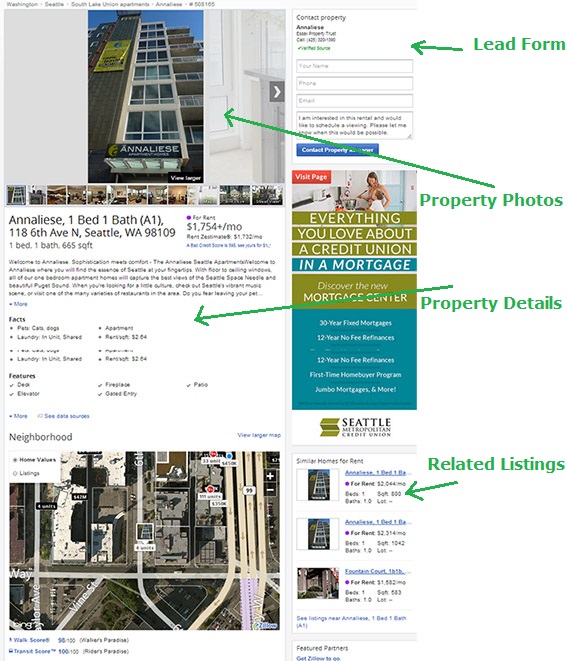
It is obvious that every real estate site, will have the option to upload a property listing. But, what you must ensure, is that there should be a secure way to post information. For this, you need to provide a login area, using which brokers, sellers, dealers or your realtor firm can upload listings. Also, when uploading a listing there should be fields to categorise and describe the listing.
For example, there should be fields to describe property type, the number of rooms available, location, a possibility to upload pictures, a price (as applicable), etc. If you do allow third party firms (such as brokerage firms) to upload listings, you need to link their information to each listing as well. This information should be displayed along with the property information to a visitor to maintain transparency.
Search for Property Listing
A very important feature, and the kind which will make or break your site, is an advanced property search option. If a visitor cannot find the desired property, despite the fact that there might be many which meet his or her criteria, the purpose of your site is lost. If you ensure that every property listing will have to be classified correctly, certain details have to be made mandatory at the time of uploading a property listing. These details can then be used to shortlist a category when a search is being performed. The categories provided for a property listing can be used as search options.
For example, if you list two types of properties, (for sale or for rent), there should be a possibility to select the desired type of property when performing a search.
Lead Generation Forms
Investing in a property is of considerable amount of importance for any person. Undoubtedly people visiting your real estate site have several questions which need answered, before a conversion can be made. For this very reason, apart from listing contact information on your site, you must also provide enquiry forms, which can be easily accessed to make quick enquiries.
Another great feature that your site can have, is a notifications option for visitors. For example, a user can subscribe to receive notifications every time a certain type of property is added (in a certain location).
Banners and Promotions
Paid listings are a great way to earn you some money. If you’re thinking about providing promotional offers on your site, you will need to take into account some space that you can employ for banners and advertisements. Usually, the header, and the sidebar are reserved for such purposes.
Auto-Posting to Classified Advertisement Websites
Considering that Classifieds Websites such as Olx, Quikr or Craigslist, are gaining a lot of popularity, you could consider adding an auto-posting functionality, which could post listings on your site, directly on such websites. The auto-posting feature can be either controlled by the site owner, or can be an option provided to every seller, uploading a property.
Seller Reviews
People always search for reliable deals. And the only way they can be assured of reliability is by reading what other people, in similar situations have to say about your site, or property agents advertising through your site. A reviews section can also help you decide the popularity (or unpopularity) of agents, dealers or brokers using your site.
Build a Real Estate Website On WordPress
Choosing a Suitable Theme
The base of any site, is a well suited theme. A theme is not only used for styling purposes, but it can provide basic, must needed features for your business. For a real estate website, the main criteria when selecting a theme, is that it should provide easy to navigate options, and should be clean and light-weight. Considering that you will have a lot of data on your site, a slow theme, can result in poor user experience. Real estate platforms benefit greatly from industry-specific WordPress design that prioritizes visual hierarchy and property discovery.
For your convenience we have shortlisted a few themes which you could consider:
- ElegantEstate Real Estate WordPress Theme: Elegant Themes brings you ElegantEstate, a very popular Real Estate Theme.
- AgentPress Pro Theme: A child theme of Genesis, brought to you by StudioPress. Definitely a must consider for Genesis fans, it is a great light-weight, buyer-friendly theme.
- Homeland – Responsive Real Estate WordPress Theme: A theme built by codeex, provides great features to easily setup your real estate website.
Properties and Agents as Custom Post Types
Irrespective of the theme you choose, you need to maintain property and seller data. A logical option to maintain such data, is to create Custom Post Types for Property and Property Agent (sellers, dealer or brokers). These can be created programmatically, or using a WordPress plugin, Custom Post Type UI.
The features for the Custom Post Types should be added as custom fields. For example Property custom post type, would have the fields, Price, Location (City, State, Zip Code), Area, etc.
Use of Custom Taxonomies
To classify and categorize property listings, the custom post type Property should have custom taxonomies. For example, custom taxonomies should be created for
- Property Type (Commercial for Sale, Commercial for Lease, Residential for Sale, Residential for Lease).
- Number of Rooms (Studio, Penthouse, Duplex, 2BHK, 3BHK, etc)
- Property Status (Ready-to-Move, Under Construction, New Project)
Registration and Login Module for Agents
There should be a registration option for Property Agents. For this, we will have to create a new user role. This user role will be able to create a profile, which will be saved as a Property Agent custom post type. The user also has the possibility to publish Property Listings. You can choose to auto-publish listings, or publish only on admin approval. To allow easy submission of property listings, you can also integrate custom post type publishing from the front-end.
Integrating an Advanced Search Option
As mentioned, a search option, is the backbone of your real estate website. Your website has to either integrate IDX (MLS search), or can provide your own advanced search option, using Sphinx or Solr. To learn how to achieve this, you can read our previously written article, which details out how an Advanced Search Option should work on a real estate website.

Gravity Forms Plugin for Lead Forms
The Gravity Forms plugin can be used to set up the forms needed on the site. An advantage of using the Gravity Forms plugin is that, data is automatically saved in a database, you wouldn’t need an additional plugin to provide this feature.
Additional Modules (SEO, Banners, Reviews, Notifications)
For other features you were considering to add, you can either scout for a WordPress plugin or provide a custom feature.
- Search Engine Optimization: A must-have plugin, would be an SEO plugin, such as WordPress SEO, to help rank your website in an organic search.
- Banner: You can add Advertisement Banners as a custom post type, or you could use a plugin, such as Random Banner Plugin.
- Reviews: To provide visitors the option to review brokers, dealers or sellers on your site, you can provide a simple rating option, which can be easily set up as a custom field for the custom post type Property Agent. Buyer comments could be accepted using the Comments field provided by default in WordPress.
- Notifications: The email notification options can be set up, using a custom feature. A custom WordPress plugin needs to be put in place, which can allow visitors to subscribe for notifications based on custom taxonomies.
A real estate website, built well, with adequate amount of features, an easy-to-navigate-theme, a powerful search, and informative listings, is sure to succeed. You can of course tweak the features as per your convenience. If the site is already live and just needs to move to better infrastructure without breaking your listings, forms, or agent logins, our guide on migrating a WordPress site cleanly walks through what to check first.
Let us know if this article helped you, or in case you needed additional help with your website development needs. We would like to hear from you, so do leave your comments, in the comment section below.
You may also like to Read: How to Create a Classifieds Website on WordPress.
Frequently Asked Questions
How much does it cost to build a real estate website on WordPress?
For a solo agent, a WordPress build with IDX integration typically runs $3,000-$8,000, with hosting adding $20-$100 a month and maintenance another $50-$200 a month. Teams wanting custom branding and more advanced search should expect $8,000-$18,000. IDX itself often carries its own setup fee plus a monthly per-feed cost on top of the base build.
Do I actually need IDX/MLS integration, or can I start with manual listings?
You can launch with manual listings, custom post types, and no MLS feed, which is exactly what this article’s approach supports. But if your market expects live MLS search, skipping IDX puts you at a real disadvantage: sites with IDX search see meaningfully more traffic than ones without it. You’ll need MLS membership and an active IDX agreement before any live data can legally appear on your site, so check with your local board before committing to a provider.
Is WordPress secure enough to run a real estate website?
Yes, but only if someone is actively maintaining it. WordPress’s flexibility means security patches, plugin updates, and compatibility checks need regular attention, and skipping that is where sites get compromised. Managed hosting with automated SSL, backups, and firewall protection has become the realistic baseline for 2025-2026, not an upgrade you can defer.
What’s the best real estate WordPress theme in 2026?
There’s no single answer, it depends on how much MLS data you need. Houzez had its most active release year yet in 2025 and suits agencies wanting a large plugin ecosystem, while WPResidence is generally positioned as the stronger pick for deep MLS feed connectivity, and RealHomes is the easier starting point for solo agents building it themselves.
Can I still use Custom Post Type UI and Gravity Forms in 2026?
Yes to both. Custom Post Type UI remains actively maintained with over a million active installs and monthly updates, so it’s still a dependable way to set up Property and Property Agent post types. Gravity Forms is also still actively developed and remains one of the more capable form plugins for lead capture on a listings site.


