

| What does a custom WordPress development company actually do once you hire them? Most people don’t find out until they’re already mid-project, when timelines slip, scope gets fuzzy, or communication breaks down. A good process prevents all of that. Here’s what it should actually look like. |
So You’re Thinking About Building a WordPress Website…
You’ve probably been there. You open a browser tab to research WordPress development companies, and two hours later, you have seventeen tabs open, zero clarity, and a mild headache.
One company promises “stunning designs.” Another says “enterprise-grade solutions.” A third has a portfolio full of work that looks beautiful — but you have no idea how they made it, how long it took, or whether the client was happy halfway through.
Here’s the thing no one tells you upfront: the process matters just as much as the final product.
A website built with a clear, transparent process is going to be less stressful, more on budget, and closer to what you actually imagined than one built by a team that just says “trust us” and disappears into a black box for three months.

This article is for anyone who wants to pull back the curtain on how a good custom WordPress website development company actually works — step by step, in plain language.
Whether you’re a business owner getting your first professional site, a marketing manager switching vendors, or someone who got burned before and wants to vet the next agency more carefully, this one’s for you.
Related Read: Why a Custom WordPress Website Is a Business Asset
| 📌 The 8-Stage Custom WordPress Process at a Glance
If you want the short version, a professional custom WordPress project usually moves through these 8 stages:
1. Discovery and strategy 2. Project scoping and proposal 3. Wireframes and visual design 4. WordPress setup and development 5. QA testing 6. Client review and revisions 7. Launch 8. Post-launch support and maintenance If a company can’t clearly explain these stages, that’s usually a sign the process isn’t as solid as it should be. |
The Process: What Actually Happens When You Hire a Custom WordPress Development Team
Okay. Here’s the part you came for.
Every company does things slightly differently, but the best ones follow a recognizable structure. Here’s what a solid, professional process looks like — and why each step exists.
Step 1: Discovery & Strategy
What happens: Before anyone opens a design tool or writes a line of code, a good team sits down (or hops on a call) actually to understand your business.
They’re not just asking “what do you want the site to look like?” They’re asking:
- Who is your target customer, and what do they need to feel confident enough to buy from you?
- What do you want visitors to do on this site — buy, book, contact, read?
- What are your competitors doing, and where is there a gap you can own?
- What’s your current tech stack — do you have a CRM, email platform, or booking system that this site needs to integrate with?
Why it matters: Skipping this step is how you end up with a beautiful site that doesn’t convert, or a homepage that talks about you when it should be talking to your customer.
What you’ll walk away with: A project brief, a sitemap (basically a map of all the pages and how they connect), and sometimes a strategy document that outlines goals and KPIs for the site.
| 📌 Imagine a yoga studio owner who comes to a development team wanting “a website with an online booking system.” After a 60-minute discovery call, the team realizes that 70% of her new clients come from Instagram.
The real need isn’t just booking — it’s a landing page experience designed specifically for social media visitors who’ve never heard of her before. The scope shifts, and the site ends up being far more effective because of that one conversation. |

Step 2: Project Scoping & Proposal
What happens: Based on discovery, the development company writes up a detailed project scope. This document outlines:
- Every page and feature is being built
- Which elements are custom vs. using existing plugins
- Timeline with milestones
- Payment structure
- Revision policy
Why it matters: Scope creep is the number one reason projects go over budget and over deadline. A good scope document protects both parties — the client knows exactly what they’re paying for, and the team knows exactly what they’ve agreed to build.
What you’ll walk away with: A proposal you can actually read and understand — not a vague “custom package” with no detail.

| 🚩 Red flag to watch for: Any company that gives you a quote without asking questions first. That’s a sign they’re quoting a template and calling it custom. |
Also Read: How Agencies Handle Large-Scale Custom WordPress Projects
| 🚩 Fast Vendor Check: 5 Questions to Ask Before You Sign Before hiring any custom WordPress website development company, ask: 1. What happens during discovery? 2. What exactly is included in the scope? 3. How many revision rounds are included? 4. How do you handle QA and launch? 5. What kind of post-launch support do you provide? 👉 If answers feel vague, dig deeper with this: “Can you show me a real example of a similar project, share a sample deliverable (like a wireframe or timeline), and walk me through exactly how this would work for my project?” Action: Don’t move forward until you’ve seen at least one real example, one actual deliverable, and one clear, step-by-step explanation. |
Step 3: Design — Wireframes, Then Visual Design
What happens: Most professional teams split design into two phases.
Wireframing first: This is a black-and-white, stripped-down blueprint of each page. No colors, no real images, no pretty fonts. Just boxes and text showing where things go and how users will move through the site.
Then, the visual design: Now the brand comes to life. Colors, typography, imagery, icons, animations — all built on top of the approved wireframe structure.
Why it matters: Reviewing a wireframe is much easier than reviewing a full-color design. If the layout is wrong, you catch it early — when fixing it takes an hour instead of three days.
What you’ll walk away with: A visual design in a tool like Figma or Adobe XD that you can click through and review before development ever starts. You approve it before a single line of code gets written.
| 💡 Quick definition: Figma is a design tool used by most modern web teams. Think of it like a Google Doc for design — you can leave comments on specific elements, and the whole team can see the same file in real time. |
Step 4: WordPress Setup & Development
This is where WordPress setup and the actual build begin — and it’s often the most misunderstood part of the process for clients.
What’s actually happening during development:
- Environment setup: The team creates a staging environment — a private, password-protected version of the site where all the building happens. You won’t see a half-built site go live.
- Theme development: Custom WordPress development usually means building a custom theme (or heavily modifying a starter theme like Underscores). This is where the approved design gets translated into working HTML, CSS, and PHP.
- Plugin selection and integration: Not everything gets built from scratch — that would be wasteful. A good team knows which plugins are trustworthy and which ones are bloated junk. They’ll use a well-maintained plugin for contact forms (like Gravity Forms), for example, rather than coding one from scratch.
- Custom functionality: This is the “secret sauce” — any features unique to your business. Custom databases, booking systems, membership areas, dynamic content filters, integrations with external APIs (like your CRM or email platform) — these get built here.
- Content entry: Either the team enters your content, or you do. A good process makes this clear upfront.
What this means for you – fewer surprises, cleaner code, and a site that’s easier (and cheaper) to maintain long-term.
Always tie back to saving time, & money, reducing stress + improving outcomes
| 💬 What clients often misunderstand about “custom.” Custom does not always mean “everything is coded from scratch.” Smart development company builds custom solutions where it creates real business value, and uses trusted tools or plugins that save time, reduce cost, and avoid reinventing the wheel. That balance is usually a sign of experience — and it’s often what keeps a project both effective and cost-conscious. |
Want to hire WordPress Developers for your custom WordPress solutions? Let’s talk
Step 5: Quality Assurance (QA) Testing
What happens: Before you see the finished site, the development team runs it through a battery of tests.
Here’s what a proper QA checklist typically covers:
- Cross-browser testing — Does it look right in Chrome, Firefox, Safari, and Edge?
- Responsive testing — Does it work on mobile, tablet, and desktop?
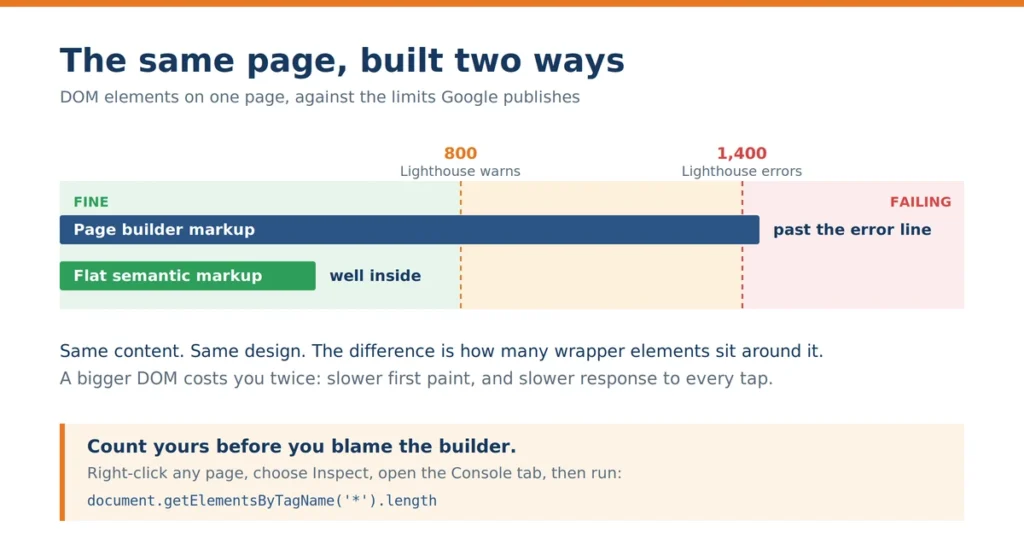
- Speed testing — Does it load fast enough? (Slow sites lose visitors fast.)
- Form testing — Do all contact forms, booking forms, and checkout flows actually work?
- Link checking — Are there any broken links or 404 errors?
- Security review — Is the WordPress installation properly hardened?
Why it matters: Bugs that get found in QA cost a fraction of what they cost after launch. This step is not optional in a professional process.

| 🐞 The Cost of Skipping QA
Fixing bugs after launch is far more expensive than catching them during development. IBM-backed defect cost research has long shown that issues discovered later in the lifecycle can cost 15x to 30x more to fix than issues caught earlier.
That’s why proper QA isn’t just about polish. It protects your budget, timeline, and post-launch reputation. |
What you’ll walk away with: A bug-free (or near bug-free) staging site that’s ready for your review.
Also Read: The Future of WordPress in 2026: From CMS to Business Platform
Step 6: Client Review & Revisions
What happens: You get access to the staging site and go through it with fresh eyes. Most professional contracts include a set number of revision rounds — typically two or three.
This is where good communication becomes critical. Vague feedback like “make it pop more” creates frustration on both sides. The best clients come with specific notes: “The font on the homepage hero feels too small on mobile,” or “Can we add a testimonials section above the footer on the About page?”
Pro tip: Set aside real time for this review. It’s not something to skim in five minutes between meetings. Walk through it like a visitor would — from the homepage, through a few page journeys, all the way to the contact form. Note what feels confusing.

Step 7: Launch
Done right, launch day should feel uneventful. No panic, no broken pages, no traffic drops.
Just your site going live exactly as planned.
| 📉 Website Launches Can Hurt SEO If They’re Handled Poorly
A redesign or migration can improve your website, but it can also create SEO problems if redirects, internal links, indexing settings, and page structure are not handled carefully. That’s why experienced WordPress teams use launch checklists and migration safeguards instead of treating launch day like a simple copy-paste job. Ahrefs and Moz both emphasise that website migrations need careful planning to avoid losing visibility and traffic. |
What happens: Once revisions are approved, it’s launch time. This involves:
- Migrating the site from staging to the live server
- Setting up SSL (the little padlock in the browser — required for security and SEO)
- Connecting your domain
- Final speed optimizations
- Submitting the sitemap to Google Search Console
Why it matters: A bad launch can tank your site’s SEO if redirects aren’t set up correctly, or leave visitors with a broken experience if something goes wrong in migration. Experienced teams have a launch checklist — and they follow it.
What you’ll walk away with: A live, working website that looks and functions exactly like what was approved.
| ✅ Before Launch, a Good Team Should Already Have Checked… Before your site goes live, the team should already have tested: 1. Mobile responsiveness 2. Browser compatibility 3. Forms and lead flows 4. Redirects and broken links 5. SSL and security basics 6. Page speed and Core Web Vitals 7. Analytics and Search Console setup If these are left for “later,” they usually become expensive cleanup work. |
Step 8: Post-Launch Support & Maintenance
Most site issues don’t come from how it’s built, they come from what happens after it’s left unattended.
What happens: The best development companies don’t disappear the day after launch.
Post-launch support usually covers:
- Fixing any bugs that surface in the first 30 days
- Training you (or your team) on how to update content in WordPress
- Setting up automated backups
- Ongoing maintenance packages for security updates, plugin updates, and performance monitoring
Why it matters: WordPress sites need ongoing care. Plugins update. PHP versions change. Security vulnerabilities get discovered. A site that isn’t maintained is a site that slowly breaks down — or worse, gets hacked.

| 🔄 Why Maintenance Matters More Than Most Clients Expect
A WordPress site is not a one-time project you launch and forget. Plugins update, themes evolve, PHP versions change, and security vulnerabilities get discovered over time.
Patchstack’s 2025 WordPress security reporting shows that the overwhelming majority of reported vulnerabilities are tied to plugins, which is exactly why ongoing maintenance matters. A site that isn’t maintained doesn’t stay “finished” for long. |
Also Read: Comprehensive Guide To WordPress Memory Management
| 🎮 Bonus: Find Which Stage Are You In? Self-Check
Take 2 minutes and answer these honestly. It’ll help you figure out exactly where you are in the process. Question Yes No Do you know exactly who your target visitor is and what you want them to do on your site? ✅ ❌ Do you have your brand assets ready (logo, brand colors, fonts)? ✅ ❌ Do you know what pages your site needs? ✅ ❌ Do you have a content plan — who’s writing the copy? ✅ ❌ Do you know what “success” looks like 6 months after launch? ✅ ❌ If you answered “No” to 3 or more: You’re in the pre-discovery phase. Don’t hire a developer yet — nail down your strategy first, or find a team that includes strategy in their discovery process. If you answered “No” to 1-2: You’re close. A good development company will help you fill in the gaps during discovery. If you answered “Yes” to all: You’re ready. Start reaching out to teams and ask to see their process documentation before you review their portfolio. |
What Separates a Great Custom WordPress Development Company from a Mediocre One
This could save you a lot of pain.
A great company…
- Documents everything and sends you summaries after every meeting
- Asks questions you didn’t know you needed to answer
- Gives you realistic timelines — and sticks to them
- Has a clear revision policy before work begins
- Can explain technical decisions in plain language
- Treats your budget like it’s their own
A mediocre company…
- Quotes fast, asks questions later.
- Goes quiet for weeks at a time
- Delivers surprises instead of milestones
- Gets defensive when you ask for revisions
- Uses jargon to confuse rather than educate

You deserve the first kind. And now that you know what a real process looks like, you have the vocabulary to ask the right questions when you’re vetting vendors.
Also Read: A Strategic Way to Build a WordPress Website for Growth
Ready to see this process in action? Connecting with a professional WordPress website development services team is the fastest way to move from “thinking about it” to “actually launching.”
🗣️ FAQs
Why does custom WordPress development cost so much more than a Squarespace site?
Because they’re not the same thing. A Squarespace site is a car rental. A custom WordPress site is a car you own — you can modify the engine, repaint it, add a roof rack, and sell it. Custom means someone is building something that works specifically for your business. That takes time, skill, and planning. You’re paying for all three.
How long does a custom WordPress site actually take to build?
Honestly? It depends wildly on scope. A 5-page brochure site with no custom functionality can be done in 4–6 weeks. A site with a custom booking system, member portal, and multi-location support? Think 3–5 months, minimum. Anyone who quotes you a week without knowing your requirements is guessing.
Can’t I just buy a premium theme and save money?
You can, and sometimes that’s the right call. But be honest about the trade-offs: premium themes come with a lot of code you don’t need (which slows your site), limited design flexibility (you’ll always look a little like someone else), and potential compatibility headaches as WordPress updates. For a personal blog or a side project? A premium theme might be fine. For a business that needs to stand out, convert visitors, and scale, custom usually wins in the long run.
What if I want to update the site myself after it’s built?
A good development team will build the site with a client-friendly CMS experience. In WordPress, that means things like Gutenberg blocks or a page builder configured for ease of use, clear documentation, and a training session before handoff. Always ask: “What will it be like for me to update this site in six months?”
I had a bad experience with a developer before. How do I avoid that again?
Ask for their process documentation before you review their portfolio. Ask for references you can actually call — not just testimonials on their website. Get a contract that defines scope, revisions, timelines, and what happens if either party doesn’t deliver. And trust your gut: if a team can’t explain their process clearly in the sales conversation, they won’t explain it clearly after they have your money.
Do I need to know anything about WordPress setup before working with a company?
Nope. That’s their job. You just need to know your business, your goals, and your customers. A good team handles everything from WordPress setup to deployment to post-launch maintenance. Your job is to be responsive, give clear feedback, and show up to the milestone reviews.
| 💡 A Few More Things Non-Technical Readers Should Know
What is a staging environment? It’s a private copy of your website hosted at a secret URL. Think of it as a rehearsal stage — the build happens here before anything goes live. It means your audience never sees a half-finished site. What is a CMS? Content Management System. WordPress is one. It’s the back-end dashboard where you log in to update blog posts, swap images, and edit page text — without touching any code. What does “responsive design” mean? It means the site automatically adjusts its layout based on the size of the screen you’re viewing it on. Phone, tablet, laptop, wide desktop monitor — a responsive site looks good on all of them. What is SEO-friendly development? It means the site is built in a way that helps Google understand what it’s about. Clean code, fast load speeds, proper heading structure, schema markup — these are all part of how a well-built WordPress site helps you rank. |
Wrapping It Up
Building a website doesn’t have to feel like a black box.
Once you understand the process, you can spot the difference between a team that’s guessing and one that knows exactly what they’re doing.
If you’re evaluating a WordPress development company, start here:
- Ask them to walk you through their process step by step
- Ask what happens after launch
- Ask how they handle scope, revisions, and communication
If they can’t answer clearly, that’s your answer.
And if you’re not sure where you stand yet, go back to the self-check above; it’ll tell you exactly what to do next.
The best custom WordPress website development company isn’t just good at building — they’re good at communicating. They make the journey feel predictable, not stressful.
You know what’s happening. You know what’s next. And when the site launches, it feels like yours — because you were part of every step.
That’s what good custom WordPress website development looks like. And now that you know what to look for, you’re in a much better position to find a team that delivers it.
Have questions about your specific project? Drop them in the comments or reach out — we’re always happy to help you think it through.