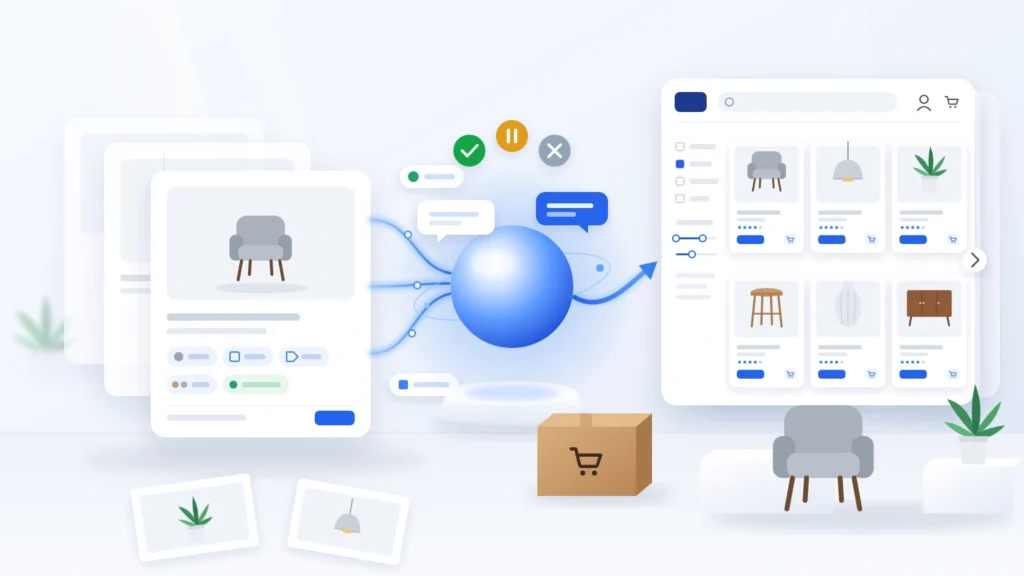

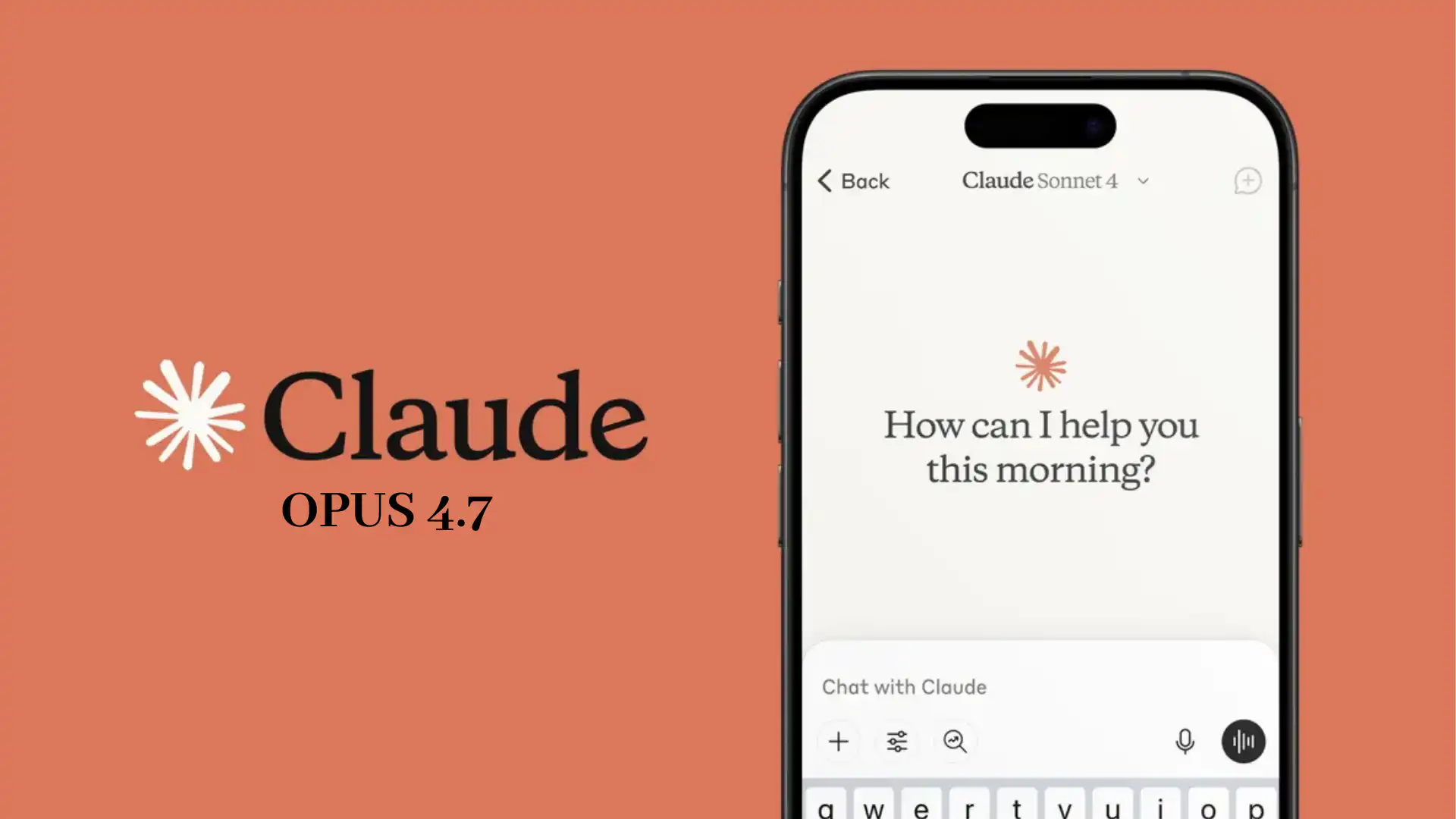
| Claude Opus 4.7 is Anthropic’s next flagship AI model, arriving alongside a first-party design tool that can generate websites, landing pages, and presentations from plain text.
It sent Figma down 6% and Wix down 5% in a single day — a clear signal the industry is taking it seriously. |
On April 15, 2026, The Information reported that Anthropic is preparing to roll out Claude Opus 4.7—its next flagship model—alongside the Anthropic AI design tool. The tool is built to turn simple prompts into complete digital experiences, including websites, landing pages, and presentation decks.
But what makes this release notable isn’t just capability—it’s direction.
Claude Opus 4.7 is designed to handle stronger multi-step reasoning, long-running tasks, and coordination across multiple AI agents. That moves it beyond assisting workflows toward executing parts of them.
The market response reflects that shift.
Following the report, Figma fell ~6%, Wix dropped ~5%, and Adobe slid ~2.7% —all within a day.
Not because AI-generated websites are new, but because this signals a deeper integration of design, reasoning, and execution in a single system.
Still, the bigger question isn’t whether the technology is impressive—it’s whether it meaningfully changes how websites are actually built, especially for businesses and agencies that rely on strategy, iteration, and control.
If you’re evaluating your next site build or redesign, this isn’t just another AI update. It’s a shift worth understanding before you decide how to move forward.
Before getting into what this means in practice, it’s worth breaking down what’s actually new in Claude Opus 4.7—and why it’s being discussed differently from previous updates.
Claude Opus 4.7 — what the model upgrade actually brings
Claude Opus 4.7 is Anthropic’s next flagship model. The reported upgrades focus on three areas: stronger multi-step reasoning, better long-running task handling, and improved coordination between multiple AI agents working in parallel.
That last part matters more than it might sound. Complex design tasks — going from a brief to a live site — involve sequencing many decisions over time. A model that holds context across a long task without drifting is genuinely more useful than one that starts strong but loses context halfway through.
How Anthropic is positioning its design capabilities
Anthropic isn’t framing this as a simple website builder. Based on The Decoder’s reporting, the positioning is closer to a full creative workflow: input a brief, get a working prototype — whether that’s a landing page, a presentation deck, or a product layout.
Some reports suggest potential interoperability with tools like Figma, allowing AI-generated outputs to be refined within existing design workflows.
This positions Claude not as a Wix replacement, but as something that operates earlier in the process — at the generation and prototyping stage — and hands off to human workflows from there.

The Anthropic AI design tool — what it can and can’t do
The core capability is generative: describe what you want, and the tool produces a working version. Websites, landing pages, presentations — all from a text prompt, for both technical and non-technical users.
Web design and UI capabilities explained
Based on current reporting, the Anthropic AI design tool is expected to handle:
- Layout generation from a brief
- Visual hierarchy
- Content placement
- Presentation structure
The Figma partnership means outputs can be handed to a designer for refinement rather than being locked in a proprietary format.
What it won’t resolve — at least not yet — is the harder stuff. Brand strategy, conversion logic, accessibility compliance, design system governance, and deep SEO architecture aren’t generative problems. They’re judgment problems. That distinction matters for anyone making real decisions about their site.
What this means for businesses and agencies
With the release of Claude Opus 4.7 and the new Anthropic AI design tool, the question isn’t whether AI will be part of your workflow—it already is.
The real question is:
Where does it actually help, and where do you still need human input?
Where tools like Claude genuinely help today
Right now, this shift is most visible in the early stages of design.
AI can help you move faster when you need to:
- Create rough wireframes
- Explore basic page structures
- Generate layout directions from a brief
- Build quick first drafts of landing pages or presentations
- Test multiple directions without starting from scratch
In simple terms, tools like Claude act as a starting point generator. They reduce blank-page friction and make it easier to get something tangible in front of your team or client quickly.
Where it still falls short without human input
Even with improvements in reasoning and context, this is where things don’t change much.
AI still struggles to deliver work that is:
- Truly brand-specific
- Strategically intentional
- Built around conversion goals
- Visually distinctive (not repetitive or template-like)
But more importantly, the biggest gaps show up in areas that directly impact how your business is understood, trusted, and chosen.
These are still very much human-led:
- Information Architecture
AI can generate sections, but it doesn’t naturally understand how to structure content around user intent and business goals. Deciding what comes first, what matters most, and how users move through a page still needs a human. - Branding
AI can mimic styles, but it often creates outputs that feel familiar rather than ownable. Translating a brand into something consistent and differentiated still requires a designer’s eye. - Conversion Flows
A page isn’t just visual—it needs to drive action. CTA placement, trust signals, friction points, and user flow are all tied to business context, not just layout. - Layout Hierarchy and Visual Judgment
AI can assemble sections, but humans decide what should stand out, what feels premium, and how the design supports the message overall.
So while tools like the Anthropic design tool help you move faster, the parts that actually define performance—clarity, trust, differentiation, and conversion—still rely heavily on human judgment. And they don’t replace:
- Decision-making
- Strategic thinking
- Design judgment
The gap isn’t just about design quality—it’s about interpretation, control, and intent.
And that’s exactly why even AI-first tools are moving toward more editable, designer-friendly workflows. Because prompt-only design can take you far—but not all the way.
This is exactly where structured redesign processes—especially AI-assisted ones—start to matter.
Not as a replacement for AI, but as a way to turn AI-generated starting points into something strategically sound, brand-aligned, and conversion-focused.
If AI is giving you outputs that feel generic or disconnected from your brand, that’s usually where structured guidance makes the difference.
Is AI giving you generic design outputs? Get a FREE consultation and see how to turn them into something conversion-ready.
Our approach — combining LLMs with human-in-the-loop workflows
This is the gap we’ve been actively working on solving through our AI-assisted redesign services at WisdmLabs.
We’ve been integrating AI into client work long enough to understand where it adds real value—and where it needs structure and supervision.

How we use AI in real client projects
We use LLMs at specific points in the design and development process — not as a replacement for the process itself. Early prototyping, copy generation for testing, generating structural variants to show clients before committing to a direction, and automated QA checks for common accessibility issues are the areas where AI reliably adds speed.
The AI-powered WordPress developer tools we use in 2026 change what’s possible in a sprint. They don’t change what a good project brief looks like, or what makes a homepage work for a specific business and audience.
| Real scenario: In one case, AI helped us generate mockups before the client was fully onboarded. That gave us something tangible to react to and helped move conversations forward faster. But the real value didn’t come from the draft itself. It came from how our team interpreted it—understanding what the client actually wanted, identifying what was missing, and shaping it into something more aligned and strategic. AI gave us speed. Human input created clarity. |
If you’re in a similar situation—using AI but struggling to translate outputs into something usable—this is exactly where the right redesign approach helps.
Not sure how to move from AI drafts to a working site? Get a FREE consultation.
Balancing speed with quality control
The trap is optimising for output over outcome. An AI tool can generate a landing page in two minutes. Whether that landing page does the job it needs to do takes significantly longer to determine — and significantly more human thinking to set up correctly.
At WisdmLabs, we run a review stage after AI assisted redesign services. We check it against the brief, the brand guidelines, the conversion goals, and the technical environment it needs to live in. Our internal Design & UI Bot assists with UI review — but a person makes the call on what ships.

| In another scenario, AI handled a large portion of the early workload—close to 70% of initial drafts—especially when budgets were tight. It made the process faster and more accessible.
But the output still needed work. Our team stepped in to: |
Tools, processes, and decision points
The decision points that matter most aren’t about which AI tool to use. They’re about what you’re trying to accomplish, who you’re trying to reach, and what success looks like after launch. Those questions need answers before any tool touches anything.
Our AI-assisted redesign process lays out exactly what that looks like—from initial brief to post-launch performance validation.
If you’re deciding how to approach your next redesign, it helps to look at where AI-only workflows differ from AI-assisted, professionally guided redesigns.
Should You Use a Claude AI Design Tool for Your Next Redesign?
| Factor | AI-only redesign | AI-assisted professional redesign |
| Best for | Simple info sites, MVP tests, low-stakes pages | Revenue-generating sites, brand-led redesigns, complex UX |
| Speed | Hours to days | Days to weeks |
| Brand consistency | Depends entirely on brief quality | Human-guided, system-enforced |
| Conversion strategy | Not included | Core to the process |
| Accessibility & performance | Needs external QA | Built into the workflow |
| Cost | Low (tool subscription) | Higher, tied to business outcomes |
| Risk | Generic output, missed edge cases | Lower with the right partner |
If you’re weighing whether to rely on AI alone or bring in expert support, it helps to evaluate what’s actually at stake for your business.
Need clarity before you decide? Get a FREE consultation tailored to your use case.
The case for using AI tools in your workflow
AI tools built on Opus-class models have become genuinely useful for designers and developers. They accelerate wireframing, generate copy variants, produce component options, and cut the repetitive production work that used to eat a designer’s day. As XDA-Developers noted, Claude has become “the perfect tool for bringing design and coding domains together.”
That’s real. Using these tools well is now a professional skill, not a shortcut.
The case for bringing in expert oversight
The shift AI creates isn’t “designers are no longer needed.” It’s a rebalancing of where human judgment concentrates. As Craft & Root put it plainly: “The value of design strategy — the kind that requires conversation, context, and judgment — is about to become more concentrated in the hands of fewer, better-equipped people.”
That’s worth considering if you’re a business owner deciding between a prompt-to-site tool and a structured WordPress redesign. The AI output might look fine. The question is whether “looking fine” is enough for what you’re trying to achieve.
For more on setting realistic expectations: WordPress Website Redesign: What to Expect and Is It Time for a WordPress Revamp?
FAQ
Is the Anthropic AI design tool available now?
Not officially, as of mid-April 2026. The tool was reported by The Information on April 15, 2026, citing a single unnamed source. Anthropic has not confirmed a public release date. Watch the official Anthropic announcements for confirmation.
Can Claude Opus 4.7 build a complete website on its own?
It can generate a functional site from a text prompt — but “complete” is doing a lot of work in that question. A generated site handles layout and content structure. It won’t handle brand strategy, SEO architecture, conversion logic, or custom integrations. Those still need human input to be done properly.
Will this replace my web designer or agency?
Unlikely, in the near term. The evidence from existing AI design tools — and from what’s already happening across the design industry — points to augmentation, not replacement. Designers are using AI to compress time on execution tasks. The judgment that makes the execution worth anything hasn’t moved.
How does Claude compare to Figma for UI design?
They solve different problems. Figma is a precision design environment that gives designers full control over every element and remains the industry standard for UI design and handoff. Claude’s design tool is a generation environment — it produces starting points fast. The Anthropic-Figma partnership suggests the tools are intended to be complementary, not competing for the same stage of work.
Should I wait for this tool before redesigning my site?
If your site has a problem that’s costing you leads or sales, waiting for a tool that hasn’t officially launched is unlikely to be the right call. If your site is performing well and you’re in early planning for a future redesign, it’s reasonable to monitor how the tool develops. Either way, the strategy questions — who this site is for, what it should do, what’s not working — need answers regardless of which tool eventually builds it.