
When a WordPress Redesign Goes Wrong: A Cautionary Tale
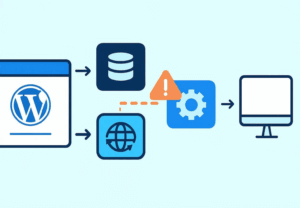
One of our eCommerce clients recently came to us after spending $15,000 on a WordPress/WooCommerce redesign that went completely off track. Even after multiple “fixes,” their issues continued to escalate.
What really happened
- The website got slower — the page loading time increased from 3 seconds to 8 seconds, which triggered Core Web Vitals warnings.
- The checkout process failed — users on mobile devices were unable to complete their purchases.
- SEO took a hit — Their Google ranking fell from Page 1 to Page 3, and organic traffic dropped by 20–30%, largely because the redesign disrupted site structure, URLs, and schema.
- No Support—The outsourced design team kept asking for additional payments for every fix and eventually stopped responding altogether.
These aren’t rare cases — they’re becoming common warning signs in the WordPress redesign industry.
Why picking the wrong redesign partner is a gamble
A poor redesign can result in:
- Lost sales
- Broken functionality
- SEO damage
- Long-term business setbacks
That client’s experience made us realize something crucial: most business owners do not have a clue about the right questions to be asked when assessing a WordPress website redesign company.
So, how do you tell the professionals from the fakes? How do you make sure that you are working with a redesign company that will provide you with results instead of excuses?
Here are the six fundamental questions you need to ask before signing any contract.
Question 1: What Is Your Process for WordPress Website Redesign Projects?
A professional WordPress website redesign firm should have a transparent, repeatable method. It is not about inflexibility—this is about established practice, which, again, provides the same output over and over again.
If the potential partner you are interviewing is unable to explain their workflow beyond “we’ll create something you will adore,” what they just said is untrustworthy.

The solid redesign process should involve:
- Discovery Phase: In-depth scrutiny of the current site performance, user experience data, competitors’ analysis, and business aims.
- Strategic Planning: Formulation of a redesign strategy that would solve the problem at hand and bring in more business.
- Design and Prototyping: Making of mockups and prototypes that you can check and give your thoughts on before the actual work starts.
- Development Standards: Purposive explanation of their coding practices, quality assurance, and testing procedures on various devices and browsers, and protocols.
- Migration Strategy: Elaborate plan for content transfer; goodwill to seo value and data integrity maintained during the transition.
- Launch Protocol: Detailed launch process that reduces delays to a minimum and comprises backup plans for technical problems.
If your selected redesign company can’t explain their process clearly, it usually means they don’t have one—and your project will suffer from that lack of structure.
Question 2: How Do You Approach SEO During the Redesign Process?
Consider a situation where a firm has toiled for five years to develop its search engine reputation and has gained the very first place on a number of valuable keywords. They hired a WordPress Redesign company to make the site more attractive and engaging.
The new site is live, and its daily organic traffic is down by 70% two weeks later. They take eight months to regain the rankings they had worked so hard for and for so long.
This unfortunate case is more common than expected. A really good WordPress website redesign company will always treat SEO preservation and enhancement as a primary task, not something of less importance to the project.

The essential SEO considerations during redesign are:
- Comprehensive SEO Audit: The first step is to audit the existing site from an SEO perspective to determine which pages are bringing in traffic, what keywords you rank for, and what is the strong part of your site architecture.
- URL Structure Planning: The old URLs should be thoroughly mapped to new ones, making sure that any indexed page has its URL preserved or redirects with 301.
- Content Preservation: Careful migration of existing content that attracts good ranking, keeping keyword optimization, heading structure, and internal linking patterns intact.
- Technical SEO Implementation: Assigning correct schema markup, effective site speed, mobile responsiveness, XML sitemap generation, and clean code that is easily accessible by search engines.
- On-Page Optimization: Specific placement of keywords in titles, headings, meta descriptions, and content—including variations of your target keywords naturally integrated throughout the site.
- Performance Monitoring: Monitoring of rankings, traffic, and indexation after the launch to promptly detect and rectify SEO problems.
Note: Specific questions to be asked of your future WordPress website redesign company: 1. What are your methods for keeping our search rankings? 2. What’s your procedure for transferring links? 3. How do you make sure metadata is migrated? 4. Would you please provide instances of redesign where SEO performance was maintained or even improved? |
If they appear to be treating SEO worries as not so important and giving the impression that it is a problem to deal with, do not hesitate to leave. Your search rankings are a result of years of effort—they require security.
Question 3: Can You Provide Case Studies and References From Similar Projects?
Claiming to be an expert is easy, but showing it is the real deal. A trustworthy WordPress website redesign company would be more than willing to provide case studies as evidence of their existing and measurable results.
However, a firm that only displays a portfolio filled with nice-looking websites but writes nothing about the performance developments, changes in the conversion rates, or the happiness of the clients is never the one to go with.
The following points should be considered while going through the case studies and references:
- Relevant Experience: Have they worked with businesses in your industry or with similar complexity requirements?
- Quantifiable Results: Look for specific metrics: “Reduced bounce rate by 35%, increased average session duration by 2 minutes, improved conversion rate from 1.2% to 2.8%, decreased page load time from 6 seconds to 2 seconds.”
- Problem-Solving Examples: Real projects encounter obstacles. How did they handle challenges? What creative solutions did they implement?
- Long-Term Relationships: Do clients return for ongoing work or additional projects? This indicates satisfaction and trust.
| Note: Don’t just review case studies passively—ask questions about them. 1. What was the biggest challenge in this project? 2. What would you do differently? 3. How long did it take from start to finish? 4. What was the client’s biggest concern, and how did you address it? |
Question 4: What Happens If Problems Arise After Launch?
Problems will still arise after a launch despite being planned and tested down to the last detail. The difference between a major issue and a minor one often lies in the post-launch support.

Before entering into any agreement with a WordPress website redesign company, be sure to clarify:
- Post-Launch Support Period: How long do they provide active monitoring and support for the site after the launch?
- Response Times: What is their guaranteed response time for critical issues as opposed to minor tweaks?
- Bug Fix Policy: What are the criteria for a bug that they will fix at no cost to you, and what is a change request that will incur extra charges?
- Emergency Protocol: In case of a situation where your site is down or there is a critical error, how fast can they come to your rescue?
- Training and Documentation: Will there be training for your team to handle the new site? Will you be given documentation on how to carry out common tasks?
- Ongoing Maintenance: What is the process after the first support period comes to an end? Do they have maintenance packages?
The cheapest WordPress website redesign company can turn out to be the most expensive when problems arise and they are nowhere to be found. In your decision-making, weigh the quality of support just as heavily as the designer’s skills.
Question 5: How Do You Approach Mobile Responsiveness and Website Speed?
Mobile responsiveness has become a necessity rather than an option in 2025. Currently, mobile devices account for more than half of the total web traffic, and Google uses mobile-first indexing.

Your WordPress web redesign company needs to consider mobile responsiveness and speed as its first priority:
- Mobile-First Design Strategy: The design process should begin with creating the mobile layouts, then going up to those of tablets and desktops.
- Cross-Device Testing: They should do extensive testing on real devices—rather than only browser simulations—not only across various screen sizes, operating systems, and browsers, but also on different refresh rates.
- Performance Optimization: Inquire about the precise procedures the company uses for optimization, like image compressing along with lazy loading, streamlining database queries, the removal of resources that block rendering, etc.
- Speed Benchmarks: Ask them to set performance targets for such things as page load time of less than 3 seconds and a Google PageSpeed score above 85.
- Progressive Enhancement: The website should still be of service to users with older devices and slower connections, albeit with a less rich experience than those on new, fast setups.
Question 6: What Is Your Communication Process and Project Timeline?
Honestly speaking, poor communication virtually equals technical incompetence in the number of projects ruined.
Imagine hiring a WordPress redesign company based on a three-month timeline that has been agreed upon. Not much is happening, time keeps flying by, and, unfortunately, the communication is not very good. Emails sent just sit there for days waiting to be opened.
By the time you are shown the mockups, they will be far away from your initial imagination, and asking for your input will take weeks. The three-month project hauls six more months, and all of a sudden, you have lost the chance to sell during critical seasonal sales periods.

- The Communication Frequency: How frequently will the company communications be updated? What would be the method and gauge of progress if there are no regular scheduled meetings or calls?
- Response Time Guarantees: What is the guarantee? What is their timescale for replying to emails/messages? 24 hours? 48 hours? How do they deal with urgent queries?
- Feedback Process: How will work be shown for your review? How much time will you be allocated to provide feedback? How long is the time span for them to implement changes after receiving feedback?
- Project Management Tools: Do they use the same tools, like Asana, Trello, or Basecamp, so that you can also see the development?
- Timeliness and Milestones: Ask for a timeline of the project that includes the milestones and deliverables in detail. When will wireframes be ready for viewing? When will the design mockups be done?
Communication style reveals company culture. If they’re unresponsive, vague, or dismissive during the sales process, that behavior will only intensify once they have your money.
TL;DR (60-second version)
Before you hire any WordPress redesign agency—especially for an eCommerce site—make sure they can clearly answer these 6 essential questions. This will protect your SEO, your revenue, and your website from turning into a costly mistake.
6 questions you must ask before hiring a WordPress redesign company
- What is your step-by-step redesign process?
They should have a documented workflow—not “we’ll figure it out as we go.” - How do you protect SEO during the redesign?
Look for a solid 301 redirect plan, URL mapping, on-page optimization, and ranking/traffic monitoring. - Can you share case studies or references from similar projects?
Ideally from WordPress or WooCommerce sites. - What support do you provide after launch?
Understand how they fix issues, who handles bugs, and what’s included vs. chargeable. - How do you ensure mobile responsiveness and speed performance?
They should mention Core Web Vitals, performance testing, caching, and mobile UX testing. - What does your communication and project timeline look like?
You need clarity on checkpoints, deliverables, and who your point of contact will be.
Conclusion: Making Your Decision With Confidence
Determining a proper WordPress website redesign agency is one of the key steps for your e-business. The divergent points of a partnership that leads to change and of a loss through trial and error are very often oriented to asking the proper questions before rolling out the agreement.
The responses to above mentioned questions—and the way they are offered— will give you all the insights you need to judge whether a firm fits your project or not. Please do not allow price to be the major factor in your decision.
Undoubtedly, a $5,000 project that results in loss of your SEO, customer exile, and a year-later complete rebuilding is far costlier than a $15,000 project that brings in and retains customers, showing measurable business growth for years to come.
| Note: Put them on the spot with difficult inquiries and listen to them not only about the content of their answers but also the way they deliver their messages. 1. Do they treat your questions kindly, or are they weary of your precision? 2. Do they clarify the procedure for you, or do they confuse you with technical terms? 3. Do they appear to be genuinely inquisitive about your business, or are they just keen to sell their services? |
Your site showcases your brand, generates your income, and accommodates your clients around the clock. It is a must for a redesign partner to treat your website with the same level of seriousness and professionalism it demands.
If you want a team that prioritizes performance, SEO, and long-term stability, book a free consultation with us, and we’ll walk you through the exact roadmap your business needs.
Also Read: WordPress Website Redesign: Best Practices